
Separable CRB’s and Best Practices for Installation
By Cory Mittleider on 6/15/2026
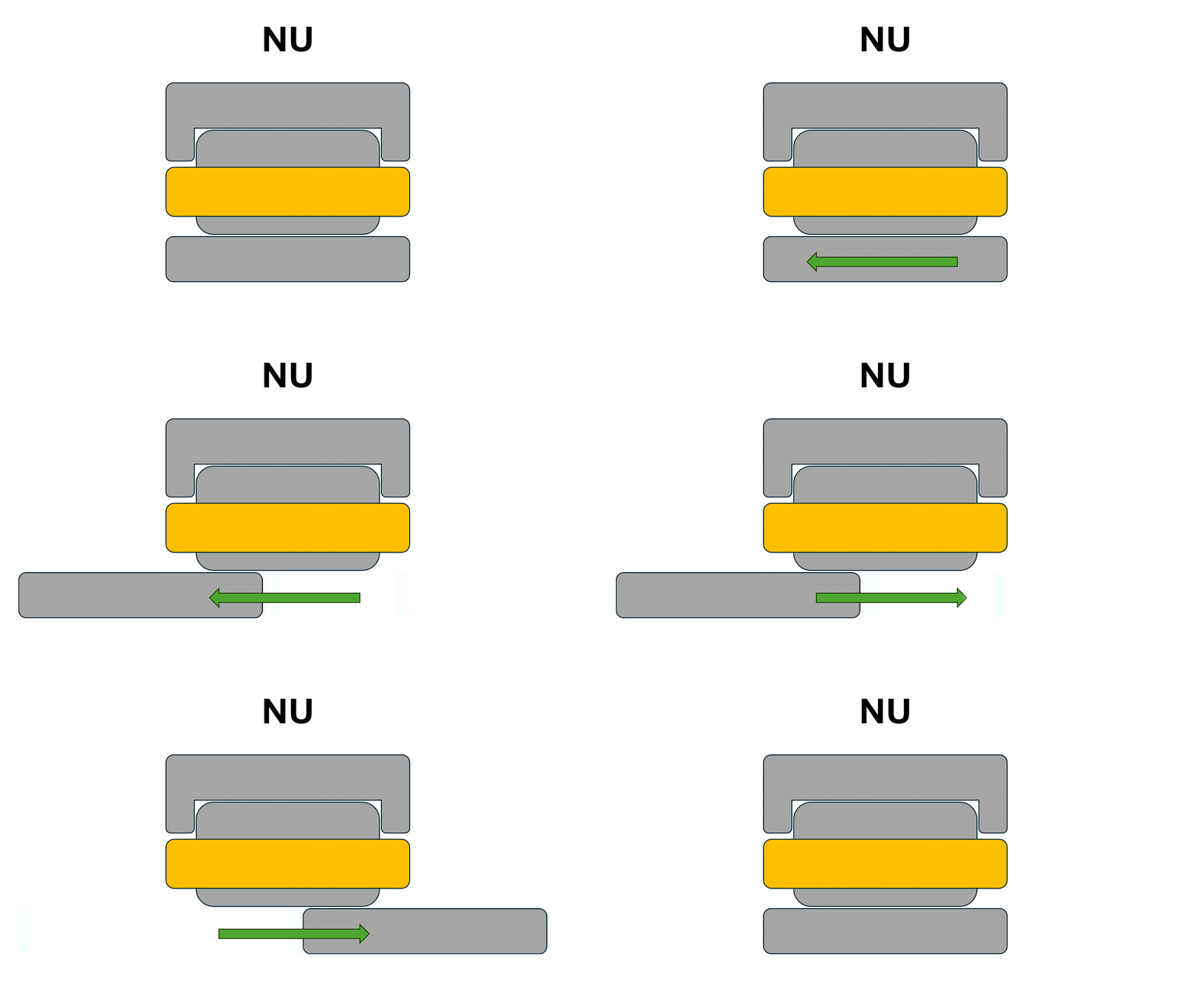
Fig 1: Animation of inner ring separability of an NU type bearing.
Cylindrical Roller bearings and separability
Many cylindrical roller bearing (CRB) types are separable; meaning that either the inner ring or outer ring can be slid off one or both sides of the bearing assembly. In the case of an N vs NU for example the basic function is the same, but which ring is separable is a primary difference between them. (see animation below).
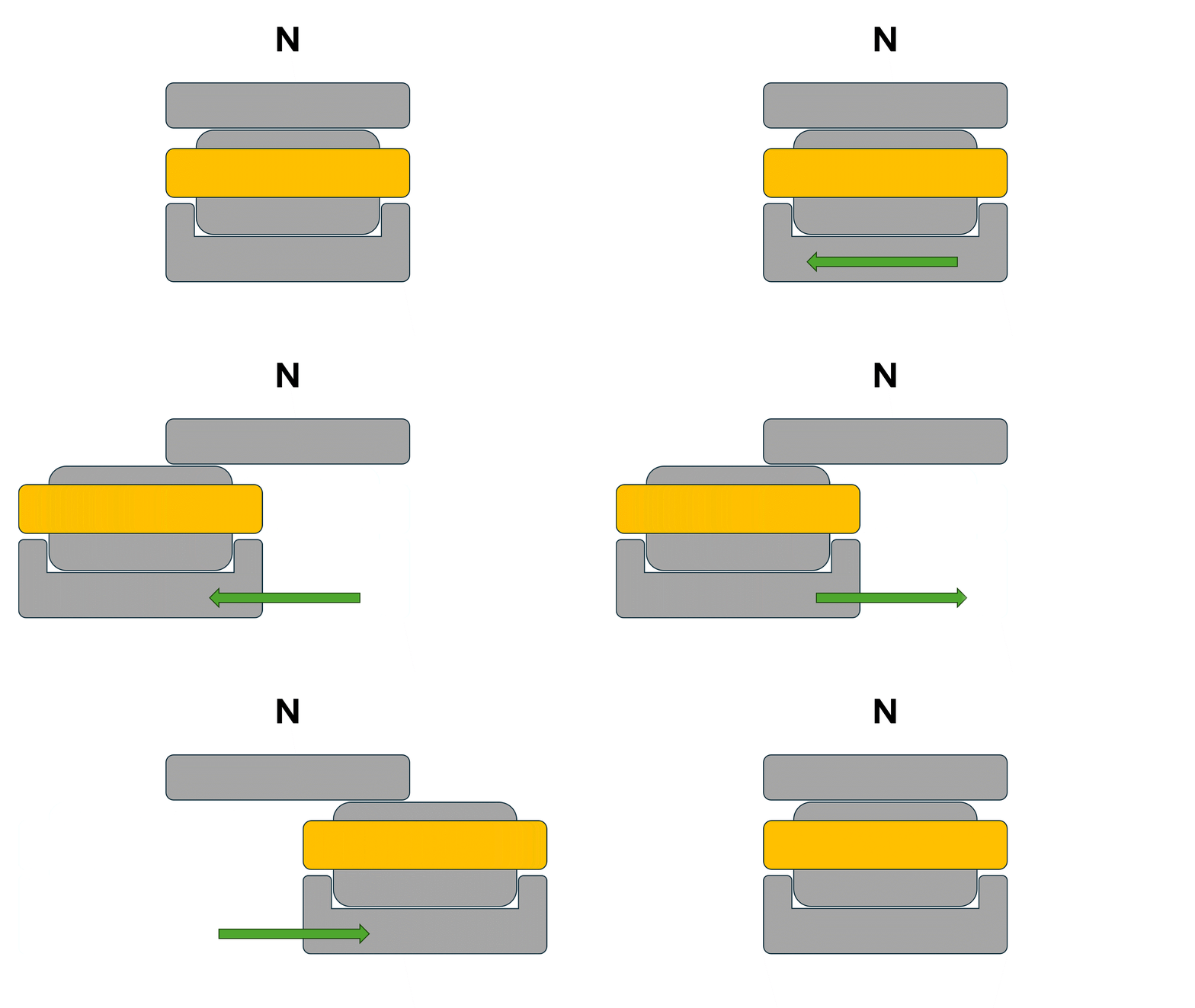
Fig 2: Animation showing difference in separability of N vs NU type CRB’s.
In addition to simplifying assembly at the factory this offers 2 primary benefits in application:
Thermal growth expansion within the bearing.
The floating nature of the bearing in the axial direction can accommodate the axial growth of a shaft when it heats up in operation.
Ease of assembly in application.
The inner and outer components can be installed separately and come together during assembly. For example, during installation of a HSS-RS bearing in a wind turbine gearbox this separation allows the shaft assembly to be lighter, avoid potential geometry constraints, and avoids having a fully blind assembly procedure.
This animation shows that when the separable ring is removed the bearing does not fall completely apart. This is because in most CRB designs the cage will hold the rollers in the remaining assembly. For example, in an NU type bearing when the inner ring is removed the rollers will fall down a bit but get caught by the cage. The cage will hold all of the rollers together in an outer ring, cage, and roller assembly. The amount the rollers fall before being caught by the cage is called roller drop.
This is what roller drop looks like:
There are some CRB’s which are full complement (see fig 5 below), not having a cage, such as NCF and NNCF types. For these bearing types if the rings are separated the rollers will fall out of the assembly so typically when they are built, they have a snap ring installed ensuring that they cannot be separated during installation. Review image below of the most commonly used CRB bearing types used in wind turbine applications.
Fig 5: Most common CRB types used in wind turbine drivetrain.
Roller drop
This roller drop is something technicians should be aware of to understand and apply best practices during installation of separable CRB’s. During installation it is likely that the dropped rollers easily slide up the chamfer of the inner ring most of the time, but in some cases things like cage design, cage material, and handling could cause these rollers to drop more than expected and/or get wedged into the dropped position. With knowledge and awareness during installation any potential damage these could cause can be avoided.
The animation below shows:
· Roller drop
· Ideal reassembly
· Excessive drop failure mode
· Roller skewing and sticking failure modes
· Best practice for bearing installation prep
· Optional special tool for high volume or extra tricky designs
Overall tips:
When installing separable bearings it is good practice to use a clean, gloved hand to check if all rollers are freely floating in cage pockets and ready for reinsertion of the separated ring. If any rollers are found to be stuck in place carefully push them back into the cage pocket before continuing. If needed, you can manufacture a tool to help.
Additionally, take care during reinsertion that the ring is coming into contact correctly with the rollers to drive them up the chamfer allowing for clean, easy reinstallation.
Generally bearing installation does not take force, so if you find yourself thinking you need to push harder or looking for a hammer or press it is advisable to stop and evaluate where the hang up is.
You can read more about gearbox bearings on this page: MalloyWind.com/gearbox
If you have any additional questions about these or other bearing types don’t hesitate to contact me at:
cmittleider@malloyelectric.com
605-357-1076